
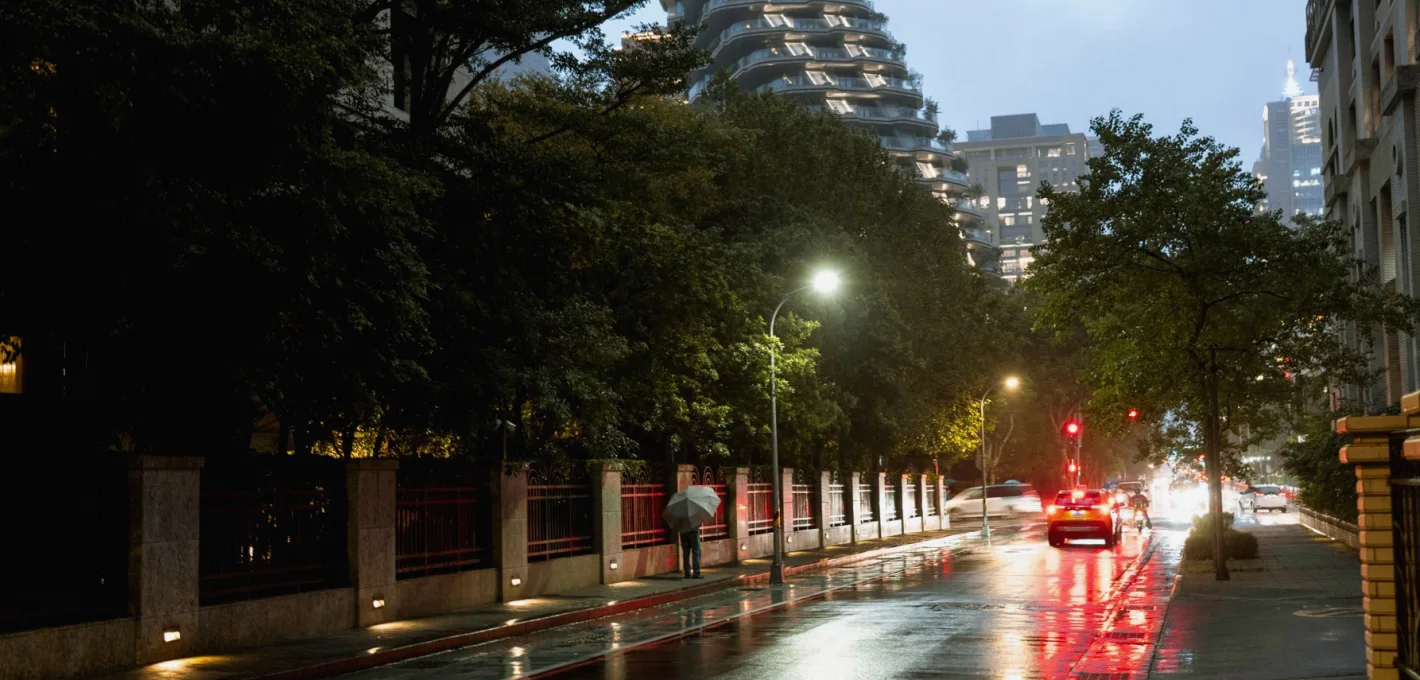
Piece to Camera in the Dark Months: Voice, Light and Composure
Short days, cold hands and wet streets change how a reporter sounds and looks on screen. Here is how to adjust your delivery and preparation for the coming weeks of autumn and winter.
Why autumn reporting asks for a different delivery
Most of our students learn their first piece to camera in mild, bright conditions. Then the clocks change, the light goes by late afternoon, and the same reporter who sounded relaxed in summer sounds clipped and hurried. Cold air tightens the voice, wind pulls at the microphone, and you are suddenly working against rain, traffic noise and failing daylight all at once.
None of this means your technique has gone wrong. It means the conditions are asking more of it. In the on-camera sessions we run in Bath, we spend these weeks on the parts of delivery that hold up under pressure: a clear opening line, steady pacing, and a body that looks settled even when you are not.
This article is the second of four on on-camera reporting, and it looks only at the season ahead. Script structure and the fundamentals of delivery are covered elsewhere on the site, so here we stay with what changes when the weather turns.
Looking after your voice when the air turns cold
Cold, dry air is hard on the voice. Standing outside for twenty minutes before a live slot leaves many reporters with a thin, slightly croaky tone that they then try to correct by pushing harder. That usually makes it worse. A forced voice sounds strained on air, and it tires you before the real work begins.
Start warming up before you leave the building. Hum gently, run through a few lines of your script at half volume, and drink water at room temperature rather than ice-cold. Keep your scarf up until the last moment so the throat stays warm. Once you are in position, breathe low and slow rather than lifting your shoulders.
If you can, say your opening line aloud three times at your normal speaking pace. The first attempt is usually rushed, the second is better, and the third tends to be the one you can trust. Resist the urge to speed up simply because you are cold and want to finish.
- Warm the voice indoors before heading out
- Sip water at room temperature, not iced
- Keep the throat covered until you are on position
- Speak your first line aloud three times at normal pace
Writing a piece to camera that survives bad weather
A script that works on a dry day can fall apart in a gale. Long, winding sentences are the first casualty: you lose your place when a gust catches your coat or a bus drives past, and the sentence never lands. In the colder months, write shorter. One idea per sentence, with the key fact placed early, gives you somewhere to return when you are interrupted.
Think too about what you are actually saying to the viewer. A piece to camera in rain can lean on the conditions where they are relevant to the story, but it should not become a weather report. Use the setting to support the point you are making, then move on.
Cut anything you cannot say comfortably in one breath. If you need to look down at notes more than once, the script is too long for the conditions. Trim it on the spot, keep the strongest line for the end, and let the shot breathe for a moment before you walk out of frame.
Standing still, moving well and staying composed
Cold makes people fidget. Reporters stamp their feet, rub their hands and shift their weight, and the camera records every bit of it. Before you start, plant your feet about shoulder-width apart and let your arms hang naturally. If you hold a microphone, keep the elbow close to your body so the arm is not shaking in the frame.
Movement can work well in autumn, since a short walk through leaves or along a wet pavement adds life to the shot. Rehearse it first, though. Know where you start, where you stop and which line falls on which step. Walking while thinking about the next sentence is how reporters trip over words.
Composure is partly physical. A slow breath before the red light comes on does more than any pep talk. If you stumble, stop, take that breath and begin the sentence again from the start. Viewers forgive a retake far more readily than a rushed, muddled delivery.
- Feet planted, arms relaxed, elbow tucked in
- Rehearse any walking move before recording
- Take one slow breath before the light goes on
Working with low light and what it does to your face
As daylight fades earlier, reporters often end up on camera at dusk with only a small lamp or the glow of a shop window for light. Your face can look flat, tired or shadowed, and many people respond by overacting to compensate. Do the opposite. Keep your expression natural and let the operator sort out the exposure.
Talk to your camera operator before you record. Agree where the light is coming from and turn slightly towards it if you can. A small adjustment of your angle often lifts the whole shot. Avoid standing directly beneath a street lamp, which throws harsh shadows across the eyes.
Wear clothing that works in muted light. Very dark coats vanish into a night background, while bold patterns can look busy on screen. Plain mid-tones tend to sit best. If you wear glasses, check for reflections from nearby lights and tilt your head a fraction until they clear.
A short routine for the weeks ahead
Put these habits together and you have a routine you can run in a few minutes, wherever you are standing. It does not replace practice, but it gives you something dependable when conditions are poor and the schedule is tight.
Arrive early enough to check your position, the light and the wind direction. Warm your voice, trim your script to what fits one breath, settle your feet and agree your angle with the operator. Then say your opening line once more and begin.
Over the autumn, record yourself in different conditions and watch the results back. You will see quickly where the cold or the dark changes your delivery. Small, repeated adjustments through these months tend to carry into the spring, when the weather is easier but the standards stay the same.
- Arrive early and check light, wind and position
- Warm up, trim the script and settle your stance
- Review your own recordings through the season
The darker months are a useful test of your reporting. If your voice, script and composure hold up in cold, wet and failing light, they will serve you well in any season. Keep your sentences short, protect your voice, agree the shot with your operator and give yourself time to breathe before you speak. If you would like to work on these skills with a tutor, our on-camera sessions run through the autumn in Bath.