
About mediafixnu
Who we are, how we teach television reporters and camera operators in Bath, and the principles behind our sessions.
A training hub built around the craft
mediafixnu began in Bath in 2014 as a place where television reporters and camera operators could practise their work properly. We teach field camera technique, on-camera reporting and live coverage. Our sessions are small, practical and run by people who have done the job.
We started with a simple observation: television journalism is learned by doing, but many people enter it with little chance to practise before they are on a real assignment. Reporters rehearse their delivery alone and operators learn on the job, often under time pressure. We wanted a place where mistakes could be made and corrected safely.
From the beginning we worked from our base at 14 Walcot Yard in Bath. Classroom sessions cover story selection, interviewing, ethics and editing choices, while location sessions test technique outside. The balance between the two has stayed central to how we teach.
Our students are aspiring and working television reporters and camera operators across the UK. Some are just starting out and want a solid grounding. Others have years of experience and want to review footage, tighten their delivery or prepare for live work.
The teaching team is small by design. Helen Marsh leads reporting and interviewing, Daniel Whitcombe leads camera instruction, Priya Nair tutors live coverage and Tom Ashworth coordinates timetables and materials. Each tutor teaches what they have personally done for a living.
We keep our offer modest and clear. We do not promise jobs or guarantee results. We promise attention to your work, honest feedback and practice that you can carry into your next shift.
Television rewards people who prepare and punishes those who guess. Our job is to give people enough practice that, on the day, the right decision is already a habit.
Helen Marsh, Head of Reporting
What makes our sessions useful on the job
Our teaching is shaped by the daily demands of television news. These are the choices that run through every course we offer.
Small cohorts
Groups stay small enough for tutors to watch each person work, so feedback is about your own shots, voice and decisions.
Real equipment
You handle cameras, microphones and kit in sessions instead of watching a demonstration, building muscle memory you can use later.
Experienced tutors
Every tutor has worked in television news and teaches from first-hand experience of deadlines, live links and difficult interviews.
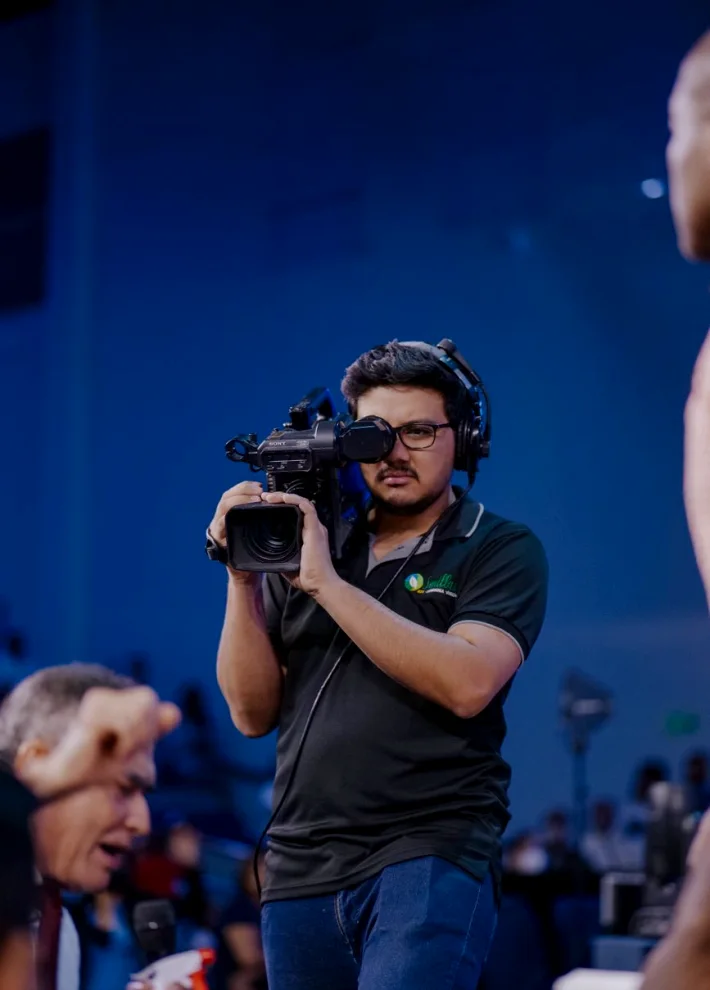
What guides the way we teach and work
Principles matter in a training hub because they decide what a tutor does when a session is not going to plan. They shape how we give feedback, how we explain mistakes and how we describe what we can offer. These are the ideas we return to in daily teaching.
Craft
Craft shows in small things: the way a handheld shot is braced, how audio is checked before a take, how a script is read aloud until it sounds like speech. We give these details time, because viewers notice their absence even if they cannot name it. Practice is repeated until good habits feel ordinary.
Clarity
Clarity applies to a report and to our teaching. We ask students to say what a story is about in a sentence, and we explain what a session covers before it starts. Feedback is plain and specific, so you know exactly what to keep, what to change and why it matters.
Accountability
Accountability means being straight about what training can and cannot do. We do not promise jobs, and we keep our descriptions modest. In journalism it also means thinking about the people in your shots and interviews. Our classroom sessions treat ethics as part of the work, not an extra.